Traditional Medicine in Transition
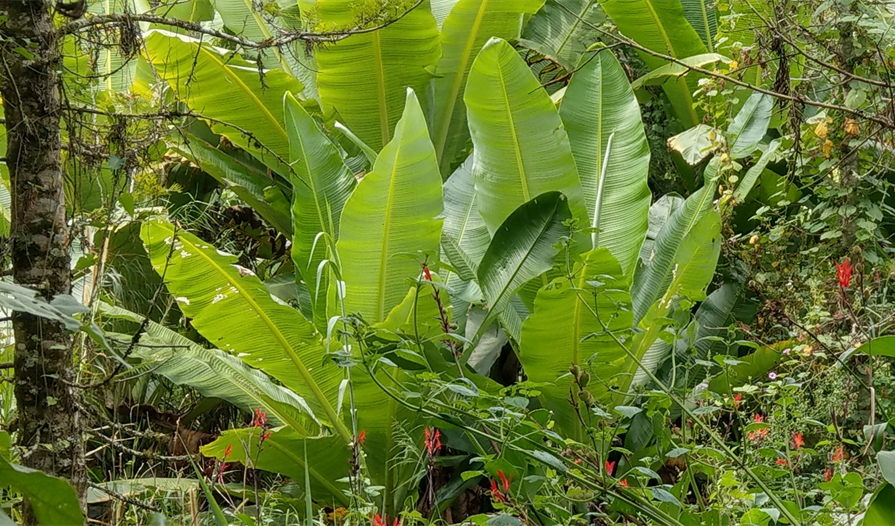
The «Traditional Medicine in Transition (TMT)» project is an interdisciplinary initiative bridging traditional healing knowledge with modern research, education, and public engagement. The project uses museums and exhibitions as platforms for safe, evidence-based knowledge transfer and dialogue between communities, researchers, and the public.
Traditional medicine is deeply rooted in cultural and historical practices worldwide. Much medicinal plant knowledge has traditionally been passed down orally within families. Today, this vertical transmission is rapidly declining as younger generations lose access to, or confidence in, this knowledge. At the same time, scientifically validated ethnobotanical and pharmacological research exists but rarely reaches the public. TMT addresses this gap by connecting academic research, cultural heritage, and community knowledge.
Research Approach
TMT combines epidemiological, ethnobotanical, and socio-cultural research to understand how traditional medicine knowledge is created, transmitted, and used today. Key activities include:
- Identifying major health challenges and commonly used medicinal plants through database research and fieldwork
- Documenting plant knowledge through literature studies and participatory community methods
- Analysing social, cultural, historical, legal, and gender-related contexts of traditional medicine
- Mapping stakeholders, communication channels, and knowledge recipients
- Using participatory museology to explore how museums and medicinal plant gardens can support knowledge preservation and sustainable use
To the project overview in the SNSF Dataportal: SNF Grant 213272
Duration: 01.06.2023 - 31.05.2026
Research activities were funded by the Swiss National Science Foundation under the SOR4D programme. Additional support for exhibitions and public engagement was provided by the Lotteriefonds Kanton Zürich.
In Switzerland
From June to October 2025, the Botanical Garden of the University of Zurich became a space for exchange. The exhibition «Uganda’s Medicinal Plant Knowledge in Transition» explored stories of medicinal plants, the people who use them, and knowledge passed down through generations - knowledge now facing global challenges.
The exhibition highlighted efforts to preserve and further develop plant-based traditional medicine in Uganda. It made the project’s fieldwork and findings tangible while posing a central question: How can traditional knowledge be respectfully preserved, shared, and carried into the future in a rapidly changing world?
The conversation will continue in 2026 with the follow-up exhibition «Plants as Medicine - Diversity in Switzerland».
Download the exhibition catalogue (PDF, 34 MB)
In Uganda
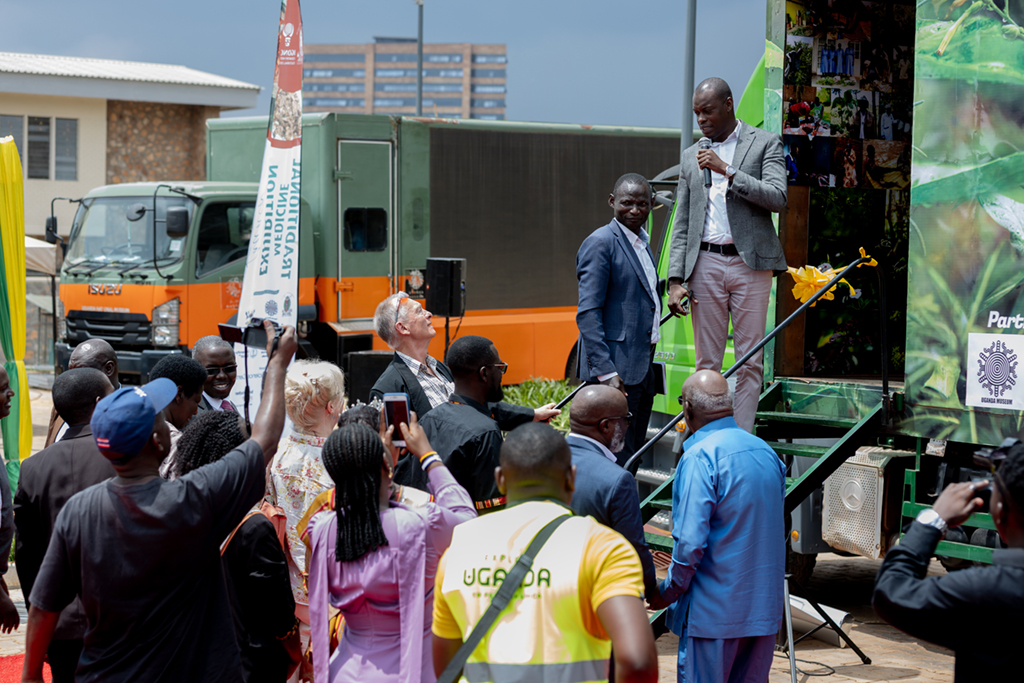
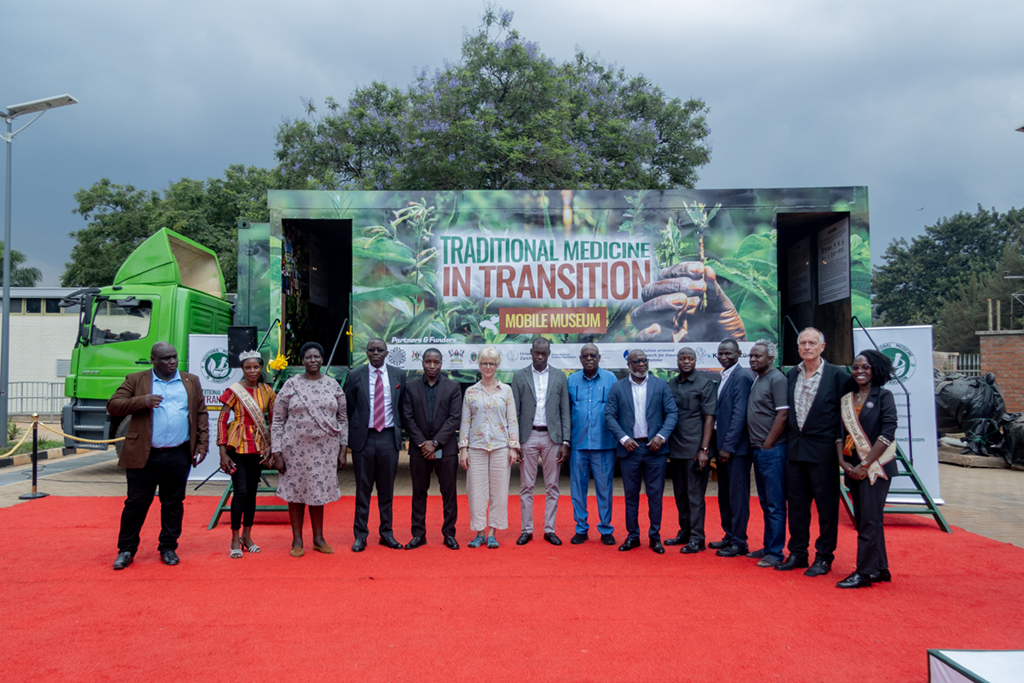
Through traveling exhibitions, the Mobile Museum brings educational materials, interactive displays, and live demonstrations directly to communities and schools across Uganda, creating accessible spaces for learning and exchange.
In 27 February 2026, the Traditional Medicine Mobile Museum was officially launched at the Uganda Museum in Kampala.
|
|
|
|
|
|

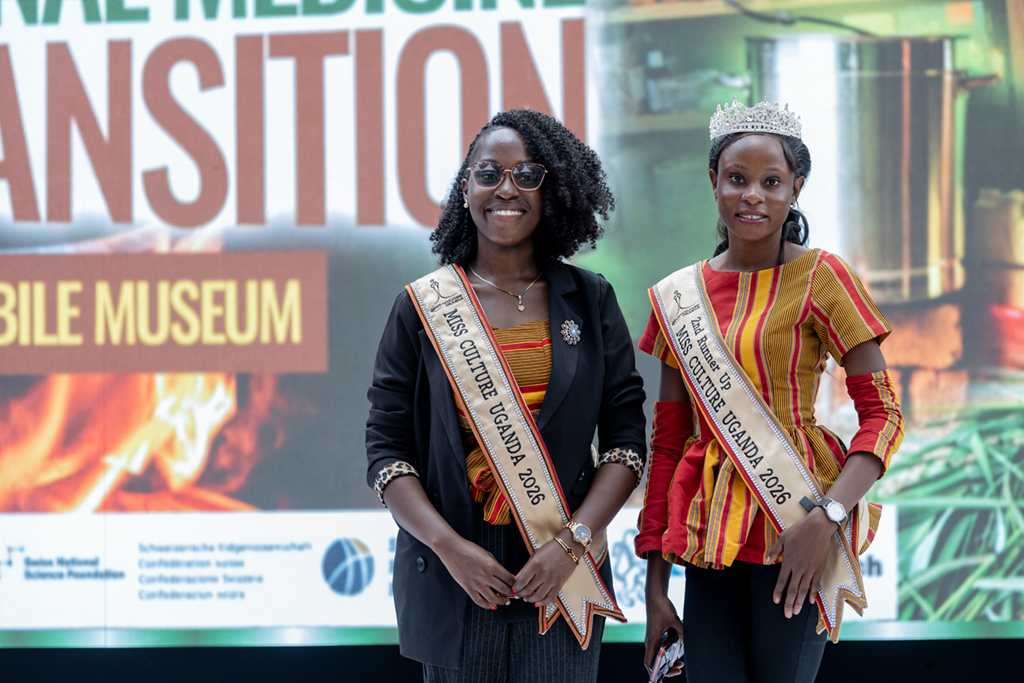
At the same time, an exhibition on«Traditional Medicine in Transition» was opened at the Igongo Cultural Centre. You can explore the virtual museum here: https://tradmedit.com/igongo-virtual-museum/
- Biocultural Diversity
- Aims and transdisciplinary research questions
- Contribution of the project to UN Sustainable Development Goals
- Experience from previous collaboration
- Traditional transmission of health knowledge in Uganda
- Nagoya protocol
- Witchcraft act
- Traditional and Complementary Medicine Act
- Traditional «strategies» to preserve biodiversity in Uganda
- Would you like to support the project financially?
- The Ambivalent Position of Traditional Birth Attendants in Uganda
- Resistance against the French crude oil pipeline in Uganda
- Relationship between different medicinal systems
- Modern charismatic healer or charlatan?
- Controversial authorisation of a Covid-19 herbal drug
- barkcloth